

Why Florida Stucco Crack Repairs Fail and How to Correctly Fix Them
Stucco exteriors are incredibly common across Florida, but they are notorious for developing hairline cracks over time. When moisture enters these small fissures, it threatens the structural integrity of your property. We regularly see this issue at GHI Painting, where homeowners try to patch the damage only to watch it reappear months later. Understanding the root cause of these failures is the first step to mastering Florida stucco crack repairs for good.
The local soil conditions in Tavares and the surrounding areas cause houses to settle, putting immense pressure on rigid exterior walls. Cheap fixes simply cannot handle that movement and eventually break open again. A proper repair requires flexible materials that bridge the gap and keep the elements out permanently. Let us look at why common repair methods fail and what a professional waterproofing system actually entails.
Inside This Guide
- The Root Cause of Stucco Stress Cracks
- Why Store Bought Caulk Fails Fast
- The Professional Approach to Exterior Waterproofing
- Why does paint peel off stucco after a few years?
- Doing Florida Stucco Crack Repairs the Right Way
The Root Cause of Stucco Stress Cracks
Ground settling and soil expansion create constant movement underneath your foundation. Because stucco is a rigid cement mixture, it has very little give when the house shifts. This tension forces the surface to split, creating those familiar spiderweb lines near windows and corners. Moisture then creeps into these tiny openings, breaking down the underlying wire mesh and causing the concrete to crumble.
→ From a professional standpoint: A hairline crack might look superficial, but it is often a direct path for water to enter your wall cavity and damage drywall.
Why Store Bought Caulk Fails Fast
Many homeowners attempt a quick fix by grabbing a tube of standard exterior caulk from the hardware store. This is exactly why DIY attempts commonly make the situation worse over time. Standard caulks dry hard and lose their flexibility, meaning the patch will just snap open the next time the wall shifts. In addition, smearing a cheap filler over the surface creates an ugly, smooth stripe that ruins the textured appearance of your siding.
→ A quick tip to remember: Only use elastomeric patching compounds that stretch up to three hundred percent of their original size.
Taking the time to do the job right is something clients notice firsthand, whether we are working inside or out. It is a pattern the team at GHI Painting hears regularly when property owners finally want the job done properly.
► Client Experience: We recently had GHI Painting LLC paint the interior walls of our home, and the results were absolutely outstanding. From the beginning, they were professional, reliable, and extremely detail- oriented. The quality of their workmanship exceeded our expectations in every way. Their team showed up on time, worked efficiently, kept everything clean, and treated our home with care and respect throughout the entire project. Their finished paint job completely transformed our home and gave it a fresh, beautiful new look. The lines are crisp, the coverage is flawless, and their attention to detail truly shows the pride they take in their work. It is hard to find a company today that delivers this level of professionalism, honesty, and quality craftsmanship. If you are looking for a painting company you can trust to do an exceptional job, we highly recommend GHI Painting LLC. We could not be happier with the outcome and will absolutely use them again in the future. - Ian Wallace
Applying that same dedication to surface preparation is what makes our exterior repairs blend perfectly with the rest of the house.
The Professional Approach to Exterior Waterproofing
A permanent fix requires treating the wall as a moving system rather than a static surface. Professional crews carve out the damaged section slightly to give the new material a solid groove to grip. After applying a high-grade elastomeric patch, we recreate the surrounding texture so the repair disappears completely. Once cured, the entire wall needs a heavy-duty waterproofing coat to seal the microscopic pores in the cement.
Why does paint peel off stucco after a few years?
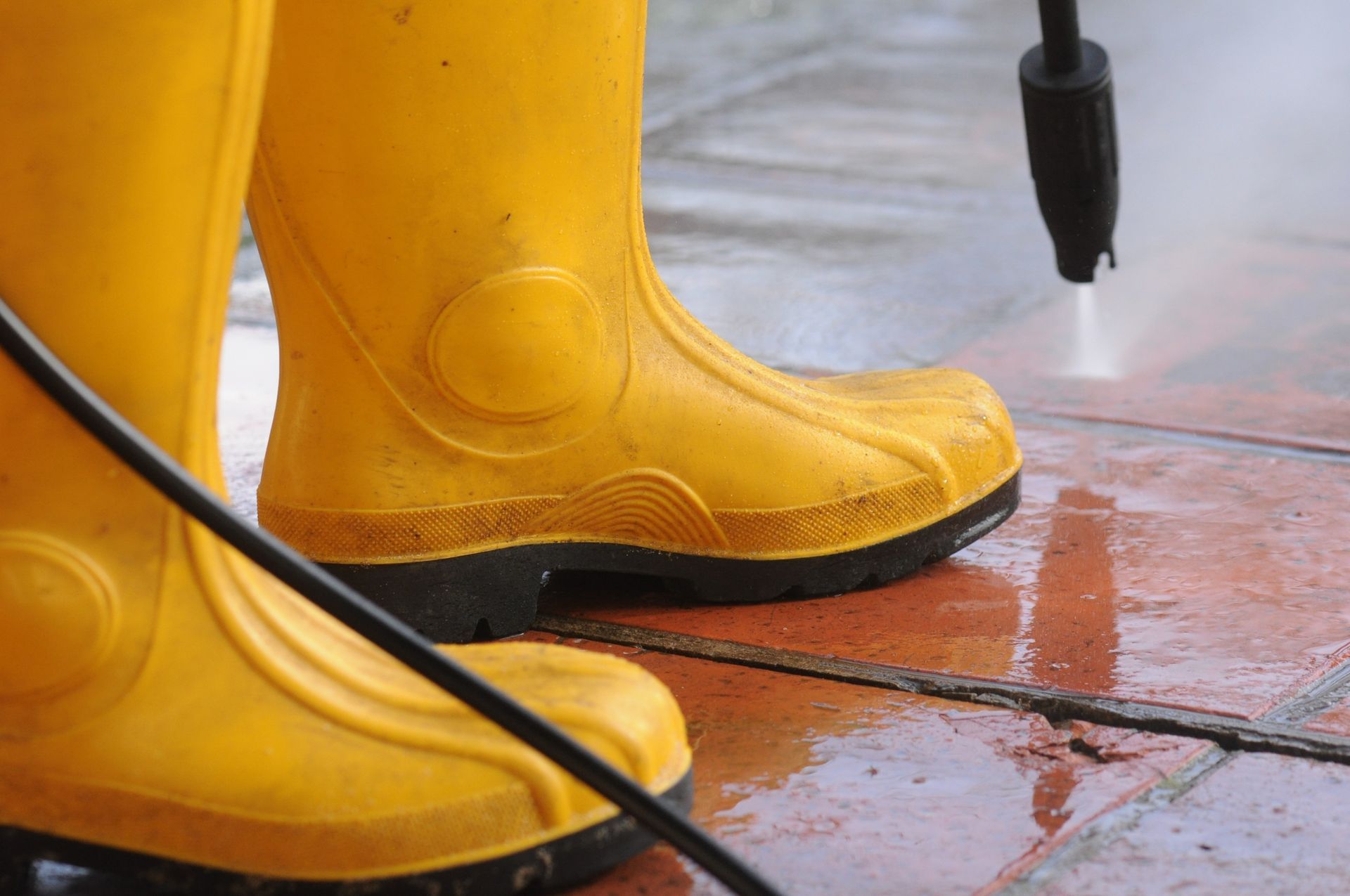
Paint peels off these surfaces when moisture gets trapped behind the coating or when the original painters skipped the primer. Unsealed concrete is highly alkaline and chalky, which prevents standard acrylic paints from bonding securely. If a contractor just sprays a thin layer of cheap paint over a dirty wall, the sun and humidity will cause it to blister and flake away in large sheets. Proper prep work involves power washing the chalky residue and applying an alkali-resistant masonry primer before the topcoat ever goes on.
→ From a professional standpoint: Skipping the primer coat is the number one reason exterior repaints fail prematurely.
Doing Florida Stucco Crack Repairs the Right Way
Sealing out moisture properly prevents expensive structural damage from occurring down the line. You need a lasting solution that flexes with your home and keeps the elements outside where they belong. Stop wasting weekends applying cheap fixes that never hold up to the elements. Reach out to schedule a consultation and let us lock down your exterior for the long haul.
Share This Blog